Table of Contents
Introduction
Learn how South African healthcare providers can choose a white label telemedicine platform - from build vs buy and POPIA and HPCSA alignment to medical-aid billing, load-shedding resilience, cost, and the questions to ask every vendor.
What Is a White Label Telemedicine Platform?
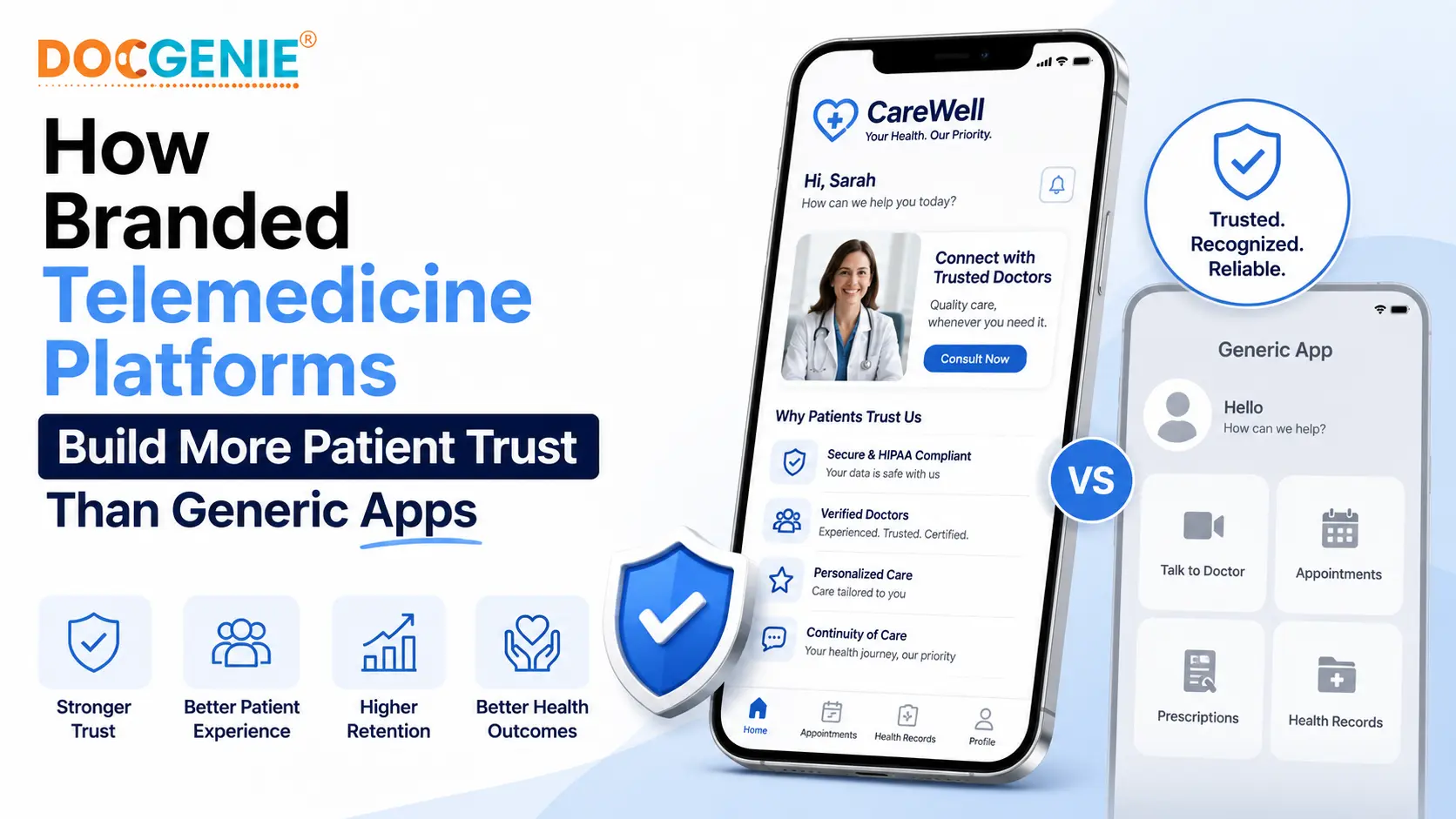
A white label telemedicine platform is a ready-built virtual care system that you launch under your own brand and domain. Your patients book appointments, consult by video or messaging, pay, and receive follow-up care in an environment that carries your clinic's name and look - not a third-party app's. You get the technology; your patients see your brand. Learn more about how branded telemedicine builds more patient trust than generic apps.
Should You Build or Buy?
This is the first real decision, and for most South African practices the answer is buy (or license) rather than build. Building your own platform means owning security, POPIA compliance, uptime, video infrastructure, ongoing maintenance, and a product roadmap - a large, continuous engineering commitment. A white label platform gives you a proven foundation you can launch in weeks and customise to your brand and workflows.
Building in-house only makes sense when you have genuinely unusual requirements, in-house engineering capacity, and the time and budget to maintain a clinical-grade system indefinitely. Otherwise, licensing lets you focus on delivering care rather than running a software company.
What Should the Platform Support for the South African Market?
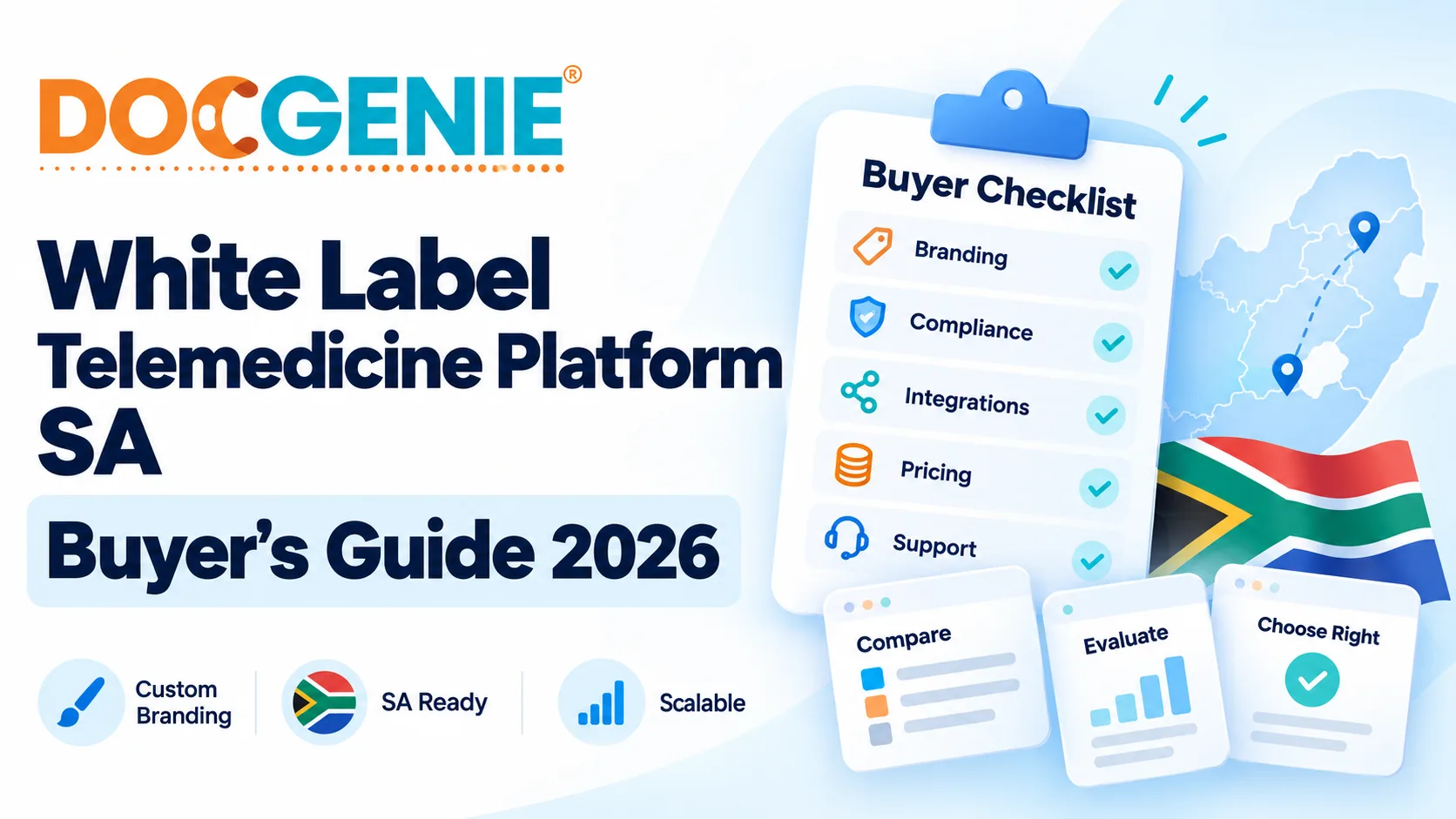
Generic global telehealth tools are rarely built for South African realities. Use this checklist to evaluate any platform for the local market:
- Scalability - support for multiple providers, specialties, and locations from a single admin view.
How Long Does Implementation Take?
Many South African deployments launch within weeks. The timeline depends on branding scope, medical-aid billing integration, and workflow complexity: a single-practice setup with standard appointment types launches faster than a multi-location, multi-specialty configuration with full billing integration. A good vendor runs a structured process - discovery, configuration, testing and training, then launch and ongoing support.
How Much Does It Cost?
Costs vary with branding scope, the number of providers and locations, billing and system integrations, and the level of support you need. What matters is the comparison: licensing a white label platform is typically far lower and far more predictable than the cost - and risk - of building and maintaining a compliant clinical platform in-house. Ask each vendor for a clear breakdown of setup, ongoing, and per-provider or per-location costs so you can compare like with like.
Questions to Ask Any Vendor
- How does the platform scale as we add providers, specialties, or locations?
Conclusion
The right platform is the one built for how South African healthcare actually works - schemes, POPIA, HPCSA, and an unreliable grid included. If you evaluate vendors against the checklist above and ask the hard questions early, you avoid the costly mistake of adopting a generic tool that cannot bill, cannot cope with load shedding, and does not carry your brand. DocGenie Global's white label telemedicine platform for South Africa is built around these local requirements, with a structured implementation process from discovery to launch.
Disclaimer: This article is general guidance, not legal, compliance, or financial advice. Confirm POPIA, HPCSA, and billing requirements with the relevant bodies and your own advisors before making a purchasing decision.
Frequently Asked Questions
What is a white label telemedicine platform?
A white label telemedicine platform is a ready-built virtual care solution you launch under your own brand and domain. Patients book, consult, pay, and follow up in your branded environment, without you building the technology from scratch.
Should a South African clinic build or buy a telemedicine platform?
For most clinics, buying or licensing a white label platform is faster and lower-risk than building in-house. Building makes sense only when you have unusual requirements, in-house engineering capacity, and time to handle security, compliance, and maintenance yourself.
What should a telemedicine platform support for the South African market?
Look for POPIA-aligned data workflows, support for HPCSA telemedicine requirements, medical-aid billing workflow support, connectivity and load-shedding resilience, your own branding and domain, and the ability to scale across providers and locations.
How long does it take to launch a white label telemedicine platform in South Africa?
Many deployments launch within weeks, depending on branding scope, billing integration, and workflow complexity. Simple single-practice setups launch faster than multi-location or multi-specialty configurations with full billing integration.
How much does a white label telemedicine platform cost in South Africa?
Cost depends on branding scope, number of providers and locations, billing and system integrations, and support level. Licensing a white label platform is typically far lower and more predictable than the cost and risk of building and maintaining one in-house.
Related Articles

Is Telemedicine Legal in South Africa? HPCSA Telemedicine Guidelines Explained (2026)
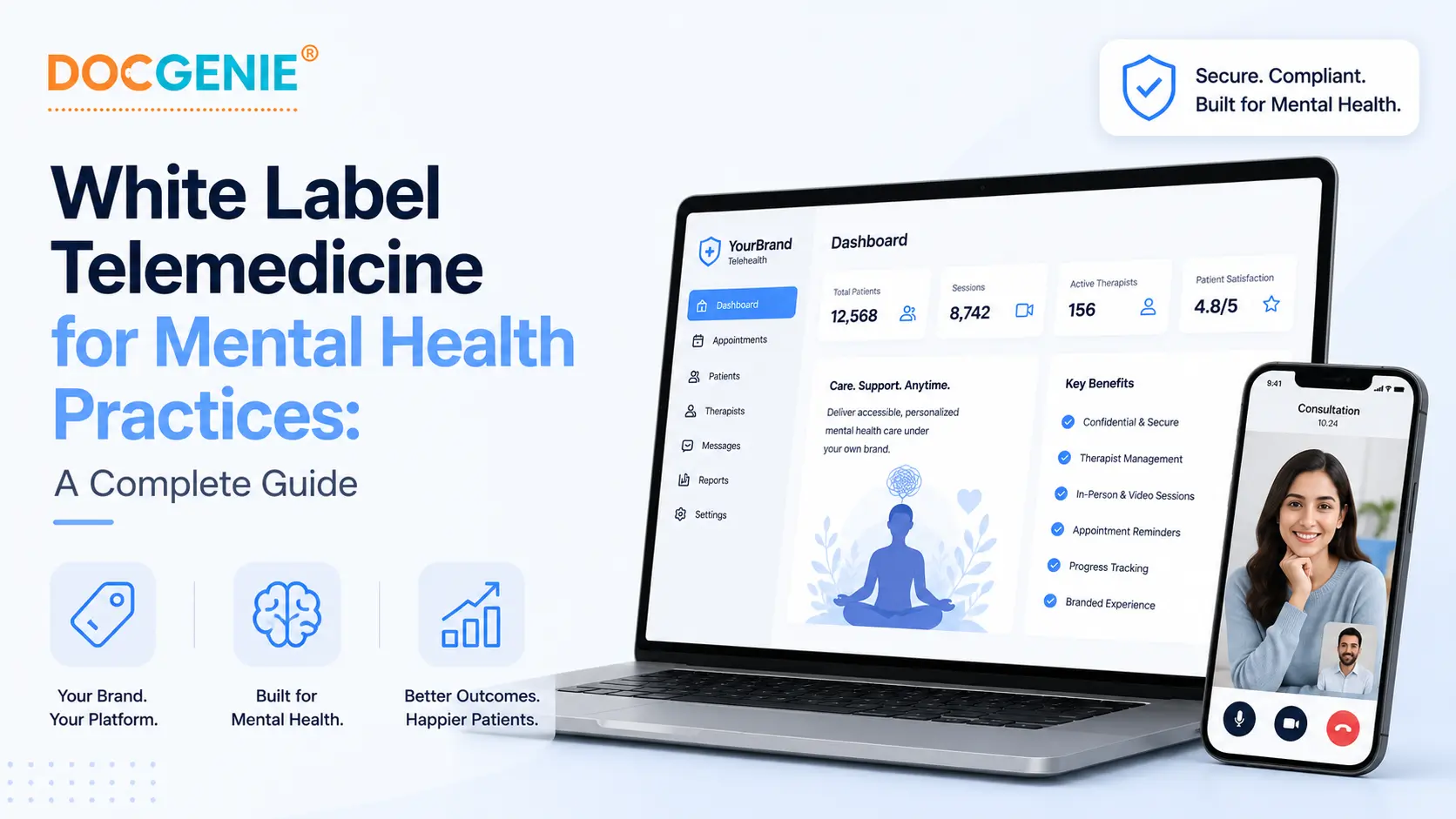
White Label Telemedicine for Mental Health Practices: A Complete Guide