Table of Contents
Introduction
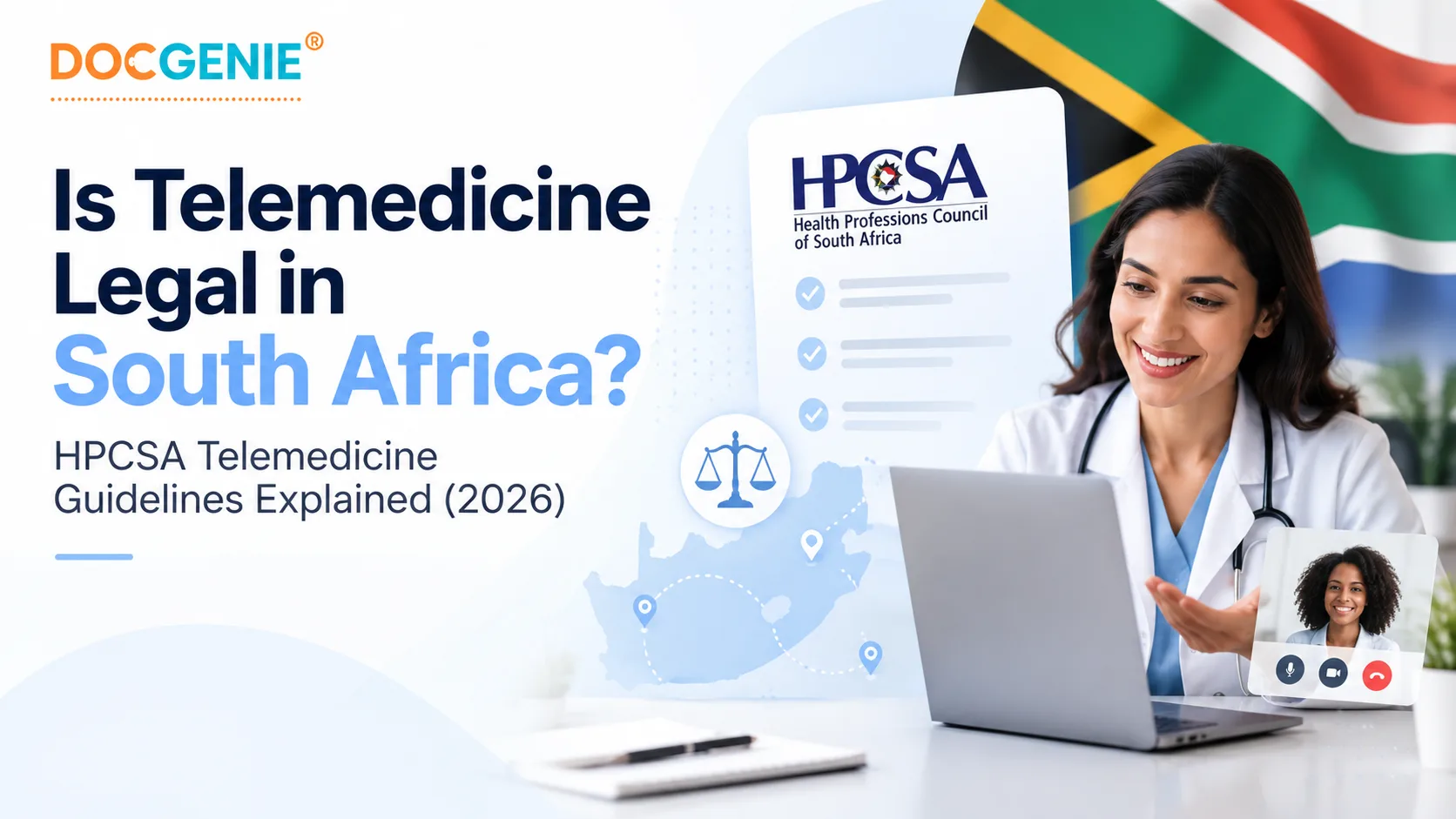
Learn whether telemedicine is legal in South Africa and what the HPCSA telemedicine guidelines and POPIA require for informed consent, patient identification, prescribing, and clinical record-keeping.
Is Telemedicine Legal in South Africa?
Yes. Telemedicine is legal and formally recognised in South Africa. Practitioners registered with the Health Professions Council of South Africa (HPCSA) are permitted to deliver care remotely - by video, audio, or secure messaging - as long as they meet the same professional and ethical standards that apply to in-person care. Adoption accelerated sharply during the COVID-19 period, and virtual consultations are now a routine part of private practice.
What matters is how the consultation is delivered. Legality is not conferred by the software you use; it depends on informed consent, proper patient identification, appropriate clinical judgement, accurate records, and compliant handling of patient data under POPIA. A white label telemedicine platform for South Africa can be configured to support these workflows, but the practitioner remains professionally responsible for each consultation.
What Are the HPCSA Telemedicine Guidelines?
The HPCSA has issued specific guidance on telemedicine and telehealth for registered practitioners. The core expectation is that the standard of care delivered virtually should be equivalent to face-to-face care, and that practitioners only use telemedicine where it is clinically appropriate. Key themes across the guidance include:
Note: HPCSA telemedicine guidance has been updated more than once, and some rules (for example, whether a prior in-person relationship is required) have shifted over time. Always check the current version on hpcsa.co.za and confirm your specific obligations with your professional body or legal advisor.
Do You Need an Existing Relationship With the Patient?
Historically, HPCSA guidance leaned toward telemedicine being used within an existing practitioner-patient relationship, with a prior in-person consultation. This position was relaxed during the pandemic to widen access to care, and subsequent guidance has continued to evolve. Because this specific point has changed over time, practitioners should confirm the current HPCSA stance before building their intake workflow - particularly for first-time patients who have never been examined in person.
What Are the Rules on Informed Consent?
Informed consent for telemedicine goes beyond consenting to treatment. The patient should understand that the consultation is taking place remotely, what the technology can and cannot do, the privacy safeguards in place, what happens if the connection fails, and when they may be asked to attend in person instead. Best practice is to capture this consent explicitly and store it in the clinical record before the consultation begins. Platforms that record consent at booking or at the start of a session make this far easier to evidence.
How Must Patient Identity Be Verified?
The practitioner must take reasonable steps to confirm they are consulting the right patient - especially for new patients, sensitive matters, or prescriptions. This can include ID verification at registration, confirming personal details at the start of the consultation, and keeping a record of the verification method. For minors or patients consulting on someone else's behalf, additional confirmation of authority to consent may be required.
Can Doctors Prescribe Medication Online in South Africa?
Prescribing during a telemedicine consultation is permitted, but within limits. Practitioners must exercise the same clinical judgement as they would in person, prescribe only when they have enough clinical information to do so safely, and observe the usual controls on scheduled and controlled substances. Certain medicines and clinical situations will require an in-person examination first. Electronic prescriptions and referral letters should be generated and shared securely, and captured in the patient record.
What Records Must Be Kept for a Virtual Consultation?
The same clinical record-keeping standards apply as for in-person care. Practitioners should document the reason for the consultation, the clinical findings, advice given, prescriptions issued, referrals made, and the patient's consent to telemedicine. These records support continuity of care, medical-aid billing, and any future clinical or medico-legal review. Secure, auditable digital record-keeping - with controlled access under POPIA - is a baseline requirement, not an optional extra.
How Does POPIA Affect Telemedicine?
POPIA (the Protection of Personal Information Act) governs how patient data is collected, stored, processed, and shared. Health information is treated as special personal information, so telemedicine providers must apply strong safeguards: encrypted sessions, role-based access, consent-based communication, defined retention, and a designated Information Officer at the organisational level. HPCSA compliance and POPIA compliance are separate but overlapping obligations - a compliant telemedicine practice needs both.
Conclusion
Telemedicine is a legitimate, established mode of care in South Africa - the risk is not in using it, but in using it without the right consent, identification, prescribing discipline, records, and data protection in place. The practical route is to build these requirements into your consultation workflow from day one, rather than retrofitting them later. A purpose-built white label telemedicine platform built for South African providers that supports HPCSA-aligned consent capture, identity checks, clinical notes, secure referrals, and POPIA-aligned data handling removes much of the operational burden - while you retain professional responsibility for clinical decisions.
For related guidance, see our guides on billing medical aid for virtual consultations in South Africa, running telemedicine through load shedding, and choosing a white label telemedicine platform in South Africa.
Disclaimer: This article is general information, not legal or compliance advice. Confirm current HPCSA guidelines and your POPIA obligations with the HPCSA and your own legal/compliance advisors before relying on it.
Frequently Asked Questions
Is telemedicine legal in South Africa?
Yes. Telemedicine is legal for HPCSA-registered practitioners, provided they follow HPCSA telemedicine guidelines and POPIA - including informed consent, patient identification, appropriate prescribing, and proper clinical records.
Do I need to see a patient in person before a telemedicine consultation?
This rule has changed over time. Requirements around a prior in-person relationship were relaxed during the pandemic and have continued to evolve, so confirm the current HPCSA position before setting up your intake workflow - especially for first-time patients.
Can doctors prescribe medication during an online consultation in South Africa?
Yes, within limits. Practitioners must have enough clinical information to prescribe safely and must observe the usual controls on scheduled and controlled substances. Some medicines and conditions require an in-person examination first.
What consent is needed for a virtual consultation?
Patients must give informed consent to being treated via telemedicine, understanding its limitations, privacy safeguards, and what happens if the connection drops. Capture and store this consent in the clinical record before the consultation.
Is telemedicine covered by POPIA?
Yes. Patient health data is special personal information under POPIA, so telemedicine providers must apply encryption, role-based access, consent-based communication, defined retention, and a designated Information Officer. HPCSA and POPIA are separate but overlapping obligations.
Which practitioners can use telemedicine in South Africa?
HPCSA-registered practitioners - GPs, specialists, psychologists, physiotherapists, and allied health professionals - may deliver virtual care, provided they follow HPCSA guidelines relevant to their profession.
Related Articles
HIPAA Telehealth Compliance: 2026 US Guide
White Label Telemedicine Platform for South African Care Providers: Complete Buyer's Guide (2026)