
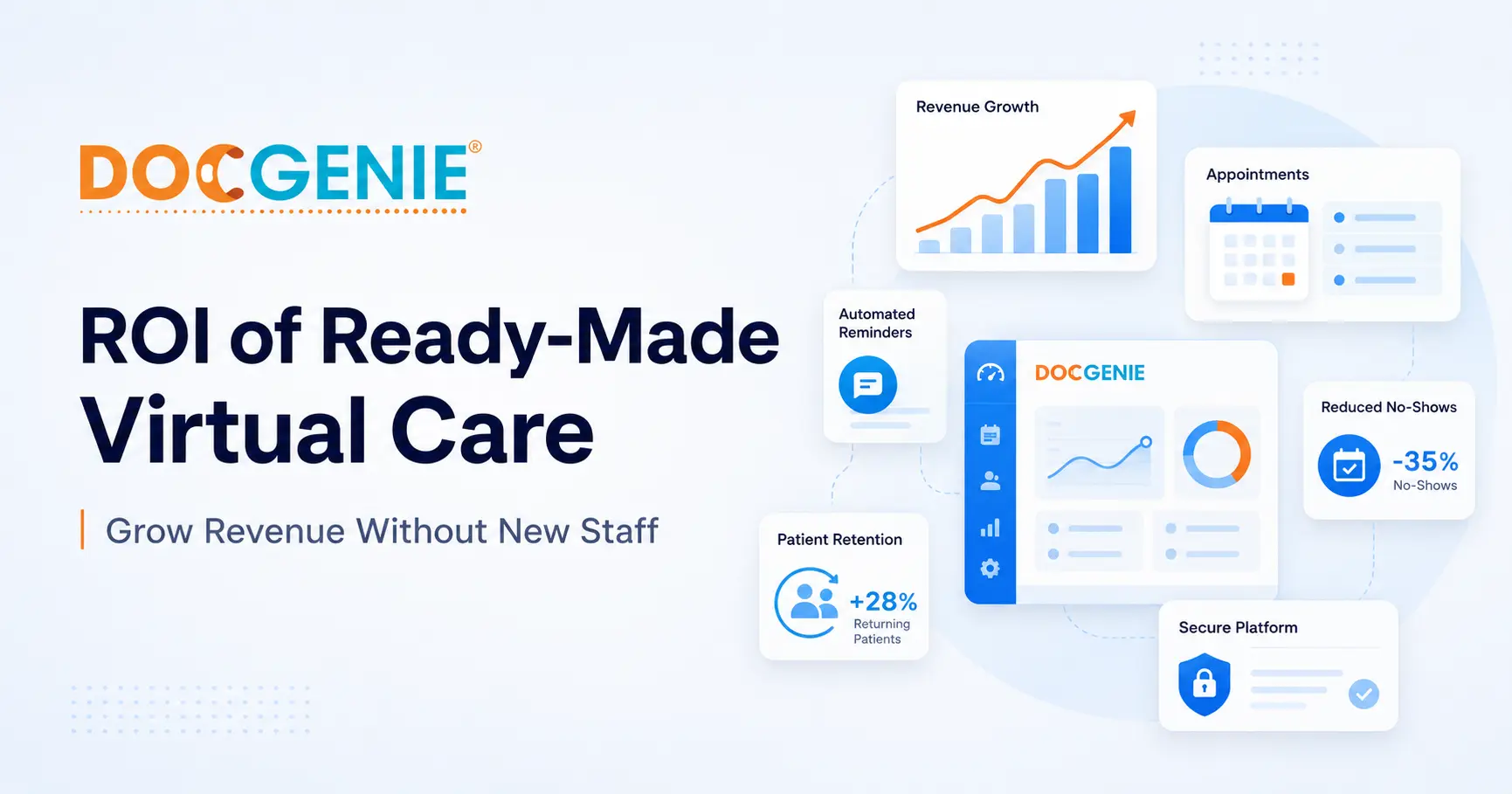
ROI of a Ready-Made Virtual Care Platform
Table of Contents
Introduction
Learn how a ready-made virtual care platform can reduce costs, save staff time, improve patient retention, lower no-shows, and grow revenue without adding new staff.
ROI of a Ready-Made Virtual Care Platform: How to Grow Revenue Without Adding New Staff
For many healthcare providers, launching a virtual care platform sounds expensive, time-consuming, and operationally complex.
There is often an assumption that going digital means hiring a technology team, building a custom platform, managing regulatory requirements, integrating multiple systems, training staff from scratch, and maintaining the entire setup year after year.
That may be true if you decide to build everything in-house.
But it does not have to be true if you use a ready-made white-label virtual care platform.
A ready-made virtual care platform allows clinics, hospitals, healthcare vendors, and ecosystem partners to launch a branded digital care solution without building the technology from the ground up. The right platform can help healthcare providers reduce costs, save staff time, improve patient retention, reduce revenue leakage from no-shows, and expand reach without adding new administrative headcount.
In other words, the ROI of a ready-made virtual care platform is not just about saving money on software development. It is about unlocking more revenue from the resources you already have.
Why ROI Matters in Virtual Care
Healthcare leaders are under constant pressure to do more with less.
Patient expectations are rising. Staff capacity is stretched. Administrative work keeps increasing. Clinics are expected to offer convenient digital access without compromising care quality, compliance, or continuity of care.
At the same time, many healthcare providers lose revenue through missed appointments, manual workflows, low follow-up completion rates, limited geographic reach, and fragmented systems that make it harder for patients to return.
A virtual care setup can solve many of these challenges, but only when it is implemented in a way that is fast, affordable, secure, and aligned with existing clinical operations.
This is where white-label telemedicine software becomes valuable.
Instead of spending months or years building a platform, healthcare providers can launch a branded virtual care solution in weeks while still retaining their brand identity, workflows, patient experience, and operational control.
The result is a stronger business case: lower implementation burden, faster launch, better patient engagement, and improved revenue potential.
What Is a Ready-Made Virtual Care Platform?
A ready-made virtual care platform is a pre-built digital healthcare solution that can be customized and launched under a healthcare provider’s own brand.
Instead of developing telemedicine software from scratch, clinics and healthcare organizations can use an existing healthcare-ready platform that includes the core infrastructure needed to deliver virtual care.
A strong ready-made virtual care platform can include:
The platform is already built, but the experience can be customized around the provider’s brand, workflows, and care model.
This makes it especially valuable for clinics, hospitals, care groups, healthtech vendors, and ecosystem partners that want to launch faster without taking on the cost and complexity of full software development.
The Cost-Saving Benefits of a White-Label Virtual Care Platform
The first part of ROI is cost avoidance.
A ready-made white-label virtual care platform helps healthcare providers avoid several major expenses that come with building and maintaining technology internally.
1. You Avoid High In-House Development Costs
Building a telemedicine platform from scratch is not a small project.
A healthcare-grade virtual care platform typically needs secure patient registration, appointment scheduling, doctor dashboards, patient dashboards, video consultations, EMR or EHR workflows, digital prescriptions, payment integrations, messaging, reporting, admin controls, role-based access, data security, and compliance-ready infrastructure.
Each feature requires design, development, testing, security review, deployment, maintenance, and support.
If the platform needs to support multiple doctors, multiple locations, branded patient experiences, third-party integrations, mobile access, or patient record management, the cost and complexity increase further.
For many clinics and healthcare businesses, custom development can quickly become expensive. Even after the initial build, the platform still needs upgrades, bug fixes, hosting, security patches, performance monitoring, and ongoing technical support.
A white-label virtual care platform reduces this burden because the core technology already exists.
You are not paying to invent the infrastructure from zero. You are paying to customize, brand, configure, and launch a proven system designed for healthcare delivery.
That difference matters because it helps healthcare providers go digital without turning themselves into software companies.
3. You Save Time by Going Live in Weeks, Not Months
Time is one of the most overlooked costs in digital healthcare.
Every month spent building, testing, fixing, and delaying a virtual care launch is a month where patients cannot book digital consultations, follow-ups remain harder to complete, doctors cannot consult remotely at scale, and the clinic continues to depend on manual workflows.
A ready-made virtual care platform shortens the path to launch.
Instead of waiting months for development, healthcare providers can move quickly through requirement mapping, branding, configuration, integrations, testing, and rollout.
With the right partner, a branded digital clinic can often be launched in weeks, not months.
This speed has direct commercial impact. The faster you go live, the faster you can begin capturing revenue from virtual consultations, follow-ups, remote monitoring, chronic care programs, and patients outside your immediate physical location.
4. You Save Staff Time on Manual Administrative Work
A ready-made virtual care platform does not only save technology costs. It also saves operational time.
In many clinics, staff spend hours each week on manual coordination. They schedule appointments by phone, send reminders manually, chase payments, manage cancellations, update spreadsheets, coordinate doctor calendars, search for patient records, issue follow-up instructions, and respond to repetitive patient queries.
These tasks may seem small individually, but they add up quickly.
A centralized digital clinic platform can streamline many of these workflows. Patients can register online, book appointments, receive automated reminders, attend secure video consultations, access prescriptions, make payments, and receive follow-up communication through one connected system.
For staff, this means fewer repetitive tasks and fewer manual handoffs.
For doctors, it means better access to patient information.
For patients, it means a smoother care experience.
Most importantly, the clinic can grow without immediately adding more administrative headcount. Existing staff can spend more time supporting patients, improving service quality, managing exceptions, and focusing on higher-value tasks.
This is one of the clearest ROI benefits of virtual care: operational growth without proportional staff growth.
The Revenue Benefits of a Ready-Made Virtual Care Platform
Cost savings are only one side of the ROI equation.
The bigger opportunity is revenue growth.
If a clinic or healthcare business does not currently offer virtual care, there is a strong chance it is leaving revenue opportunities untapped.
1. Virtual Care Can Improve Patient Retention
Patient retention is one of the most important growth levers in healthcare.
Acquiring new patients requires marketing investment, staff effort, trust-building, and time. Retaining existing patients is often more efficient, especially when they need ongoing care, repeat visits, follow-ups, prescriptions, monitoring, or long-term condition management.
Virtual care makes it easier for patients to return.
A patient who has to travel, wait, take time off work, arrange childcare, or sit in traffic for a simple follow-up may delay or skip the visit. But if the same patient can complete the follow-up through a secure virtual consultation, they are more likely to stay engaged with the same provider.
This is especially valuable for:
Digital convenience strengthens loyalty.
When patients can book easily, consult remotely, access prescriptions, receive reminders, and continue care without friction, they are more likely to return to the same provider.
In a competitive healthcare market, that matters. Patients increasingly expect convenience as part of care quality. Providers that offer a secure and well-managed virtual care experience have a better chance of keeping patients engaged over time.
2. Virtual Consultations Help Reduce Revenue Leakage from No-Shows
Patient no-shows are one of the biggest sources of lost revenue for healthcare providers.
Every missed appointment represents unused doctor time, lost revenue, delayed care, and operational inefficiency. If a clinic has a high volume of appointments, even a small reduction in no-shows can make a meaningful financial difference.
Virtual care helps because it reduces the barriers that often cause patients to miss appointments.
Patients are less likely to skip a consultation when they do not need to travel, wait at the clinic, take extended time away from work, or rearrange their day. This is particularly true for follow-up appointments, progress reviews, prescription renewals, and chronic care check-ins.
Research has shown that telemedicine appointments can have lower no-show rates than in-person appointments. If you use this claim in the final published blog, add the original study citation or source link for stronger EEAT.
For clinics, lower no-shows can translate into better schedule utilization and fewer lost revenue opportunities.
Even if a healthcare provider does not shift all appointments online, moving selected follow-ups and suitable consultations to virtual care can reduce leakage. It also gives patients more flexibility, which can improve attendance and satisfaction.
3. Virtual Care Expands Geographic Reach
A physical clinic is limited by geography. Most patients need to live or work close enough to visit in person.
Virtual care changes that.
With a branded digital clinic, healthcare providers can reach patients beyond their immediate neighborhood or city. This is especially useful for specialists, second opinion services, chronic care programs, mental health providers, preventive health services, corporate healthcare programs, and clinics serving patients in areas with limited access to care.
Expanded reach does not mean replacing in-person care. It means creating a hybrid care model where patients can access the right type of care through the right channel.
Some visits will always need to happen in person. But many consultations, follow-ups, medication reviews, and progress checks can be handled virtually.
This opens up new revenue opportunities without requiring new physical branches, larger waiting rooms, or additional front-office staff.
A healthcare provider can serve more patients, support more follow-ups, and increase appointment availability using the same core team.
4. Virtual Care Creates New Recurring Revenue Opportunities
A ready-made virtual care platform can also support recurring care models.
Many healthcare services are not one-time interactions. They require ongoing engagement, progress tracking, reminders, reviews, and repeat consultations.
Virtual care can help healthcare organizations build structured programs around:
These programs can generate repeat visits and long-term patient engagement.
Instead of relying only on one-off appointments, healthcare providers can create care journeys that extend over weeks or months. This improves both patient value and business predictability.
Why Ready-Made Does Not Mean Generic
Some healthcare providers worry that using a ready-made platform means losing brand identity or accepting a generic patient experience.
That does not need to be the case.
A white-label telemedicine platform is designed to be customized under your brand. This means your logo, colors, domain, communication templates, patient-facing experience, and positioning can remain consistent with your existing healthcare brand.
The technology is ready-made, but the experience can still feel fully owned by your clinic or healthcare organization.
This is important because patients build trust with care providers, not software vendors.
A branded virtual care platform allows patients to interact with your clinic in a familiar environment while benefiting from secure digital workflows.
For healthcare leaders, this creates the best of both worlds: faster launch and lower cost, without giving up brand control.
How to Measure the ROI of a Virtual Care Platform
To understand the business case clearly, healthcare providers should track ROI across both cost savings and revenue gains.
Key Cost-Saving Metrics
Healthcare organizations can measure cost savings through:
- Lower support burden from repetitive patient queries
Key Revenue Metrics
Healthcare organizations can measure revenue impact through:
The most useful ROI view combines both.
For example, a clinic may save staff hours through automation while also increasing revenue through more completed follow-ups. Together, these gains can make the platform significantly more valuable than a simple software expense.
A ready-made virtual care platform should therefore be evaluated as growth infrastructure, not just a technology purchase.
How DocGenie Global Can Help You Grow Without Adding New Staff
DocGenie Global helps healthcare providers, vendors, and ecosystem partners launch branded virtual care platforms quickly without building technology from scratch.
With DocGenie Global, healthcare organizations can create a white-label telemedicine platform under their own brand, complete with patient registration, doctor onboarding, appointment scheduling, secure video consultations, EMR workflows, digital prescriptions, patient communication, payments, analytics, and integrations with third-party services.
The platform is designed to help healthcare organizations centralize operations, reduce manual work, improve patient engagement, lower no-shows, and launch quickly while maintaining a branded patient experience.
For clinics and healthcare businesses looking to grow revenue without adding new staff, DocGenie Global provides a practical path forward. It helps you digitize key workflows, offer convenient virtual care, retain more patients, expand your reach, and make better use of the team you already have.
DocGenie Global is headquartered in Singapore and supports healthcare providers and ecosystem partners across 50+ countries. Its platform is HIPAA-compliant, SOC 2 Certified, and ISO/IEC 27001:2022 Certified, as stated in the provided company content.
A ready-made virtual care platform is not just a faster way to launch. It is a smarter way to scale.
Final Thoughts
The ROI of a ready-made virtual care platform goes beyond software cost savings.
It comes from faster launch, lower development burden, reduced manual work, better patient retention, fewer missed appointments, improved follow-up completion, expanded reach, and stronger use of existing staff capacity.
For healthcare providers, this is a strategic advantage.
Instead of hiring large technical teams or adding more administrative headcount, clinics and healthcare businesses can use a white-label virtual care platform to digitize key workflows, serve more patients, and create a more scalable care model.
The future of healthcare growth will not only depend on adding more people or opening more locations. It will depend on using technology to make existing teams more efficient, connected, and patient-focused.
Frequently Asked Questions
What is a ready-made virtual care platform?
A ready-made virtual care platform is a pre-built digital healthcare solution that clinics, hospitals, and healthcare businesses can customize and launch under their own brand. It can include appointment scheduling, secure video consultations, EMRs, e-prescriptions, payments, patient communication, and admin dashboards.
How does a white-label virtual care platform improve ROI?
A white-label virtual care platform improves ROI by reducing development costs, shortening launch timelines, saving staff time, improving patient retention, reducing no-shows, expanding reach, and helping providers generate more revenue from existing resources.
Can virtual care help clinics grow without hiring more staff?
Yes. A centralized virtual care platform can automate appointment booking, reminders, payments, patient communication, and follow-up workflows. This reduces manual administrative work and allows clinics to manage more patients without immediately adding new staff.
Why is a ready-made platform better than building from scratch?
A ready-made platform helps healthcare providers launch faster and avoid the high cost, complexity, and maintenance burden of custom software development. It also allows providers to use tested healthcare workflows while still customizing the platform under their own brand.
How can virtual care reduce revenue leakage?
Virtual care can reduce revenue leakage by making it easier for patients to attend follow-ups, prescription renewals, chronic care check-ins, and non-emergency consultations. This can help reduce missed appointments and improve doctor schedule utilization.
How does DocGenie Global support virtual care ROI?
DocGenie Global provides a white-label telemedicine platform that helps healthcare organizations launch branded virtual care solutions with secure video consultations, EMRs, e-prescriptions, payments, patient communication, analytics, integrations, and operational workflows.
Related Articles
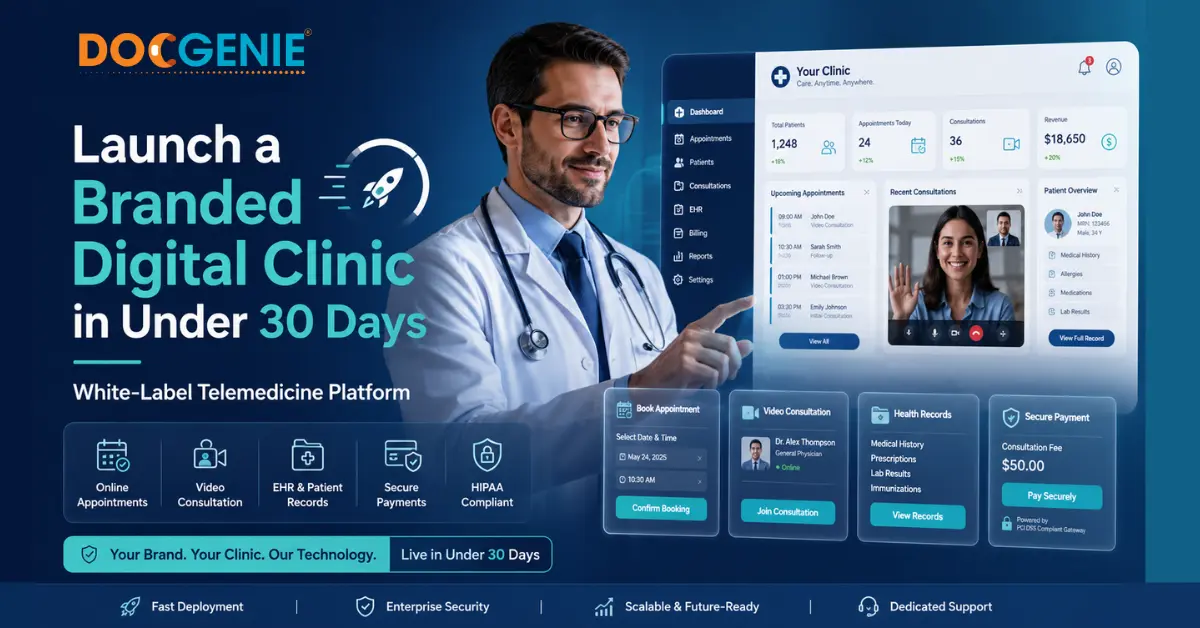
Launch a Branded Digital Clinic in 30 Days | DocGenie Global
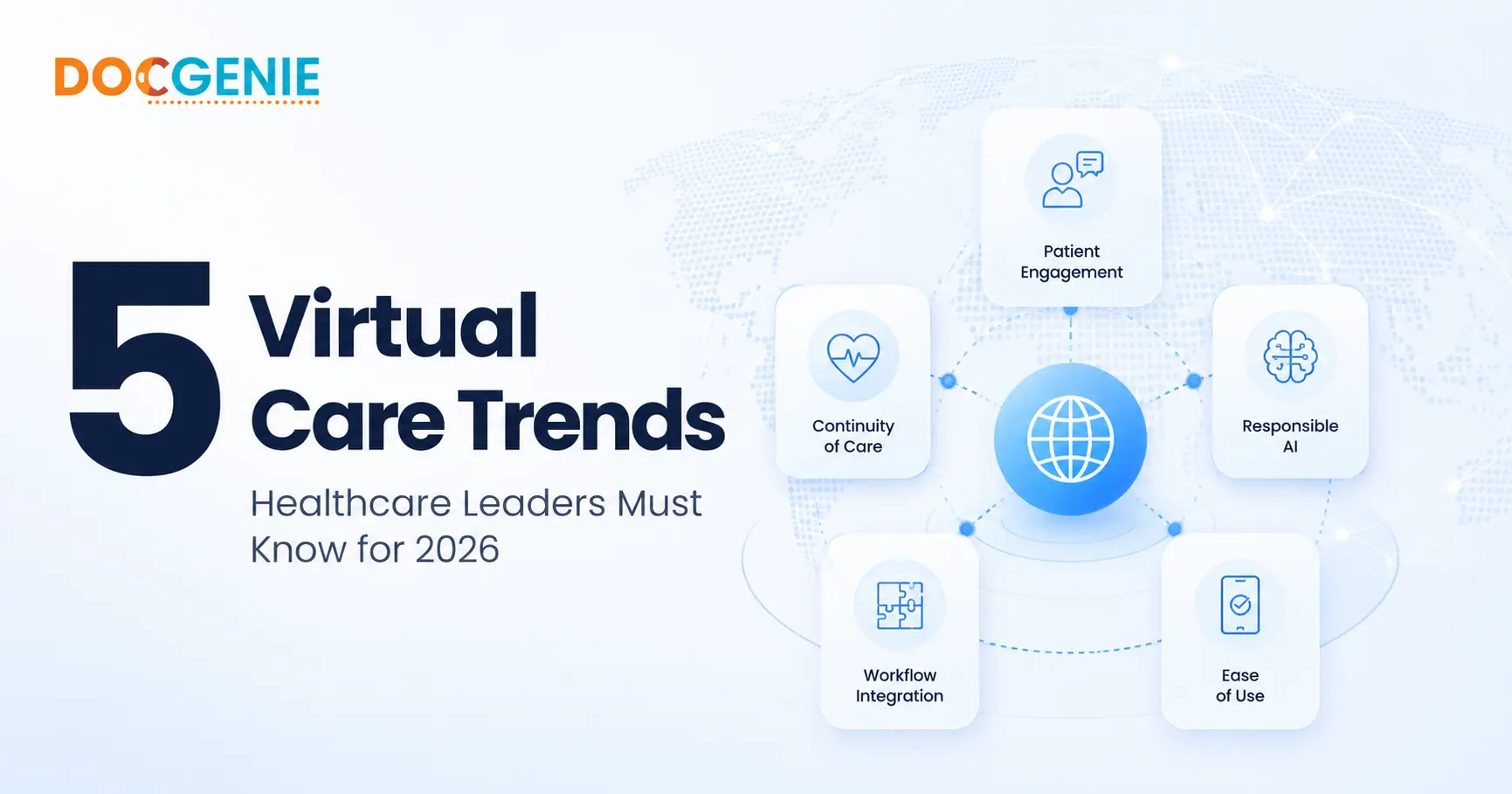
5 Virtual Care Trends Every Healthcare Leader Must Know for 2026
Grow Revenue Without Adding New Staff with DocGenie Global
Talk to DocGenie Global’s team to explore how your clinic, hospital, healthcare network, or healthcare business can scale virtual care with confidence.